Subscribe to receive the latest posts

What is mercy? The dictionary defines it as “clemency and compassion shown to a person who is in a position of powerlessness or subjection, or to a person with no right or claim to receive kindness; kind and compassionate treatment in a case where severity is merited or expected.”
This definition describes every fallen human being before God. The Bible tells us in Romans 3:23 that “all have sinned and fall short of the glory of God.” Powerless and under righteous judgment, we had no right to receive any kindness or compassionate treatment from God.
But God had tremendous mercy on us in our fallen, sinful condition and opened a way for us to be saved through believing in Jesus Christ.
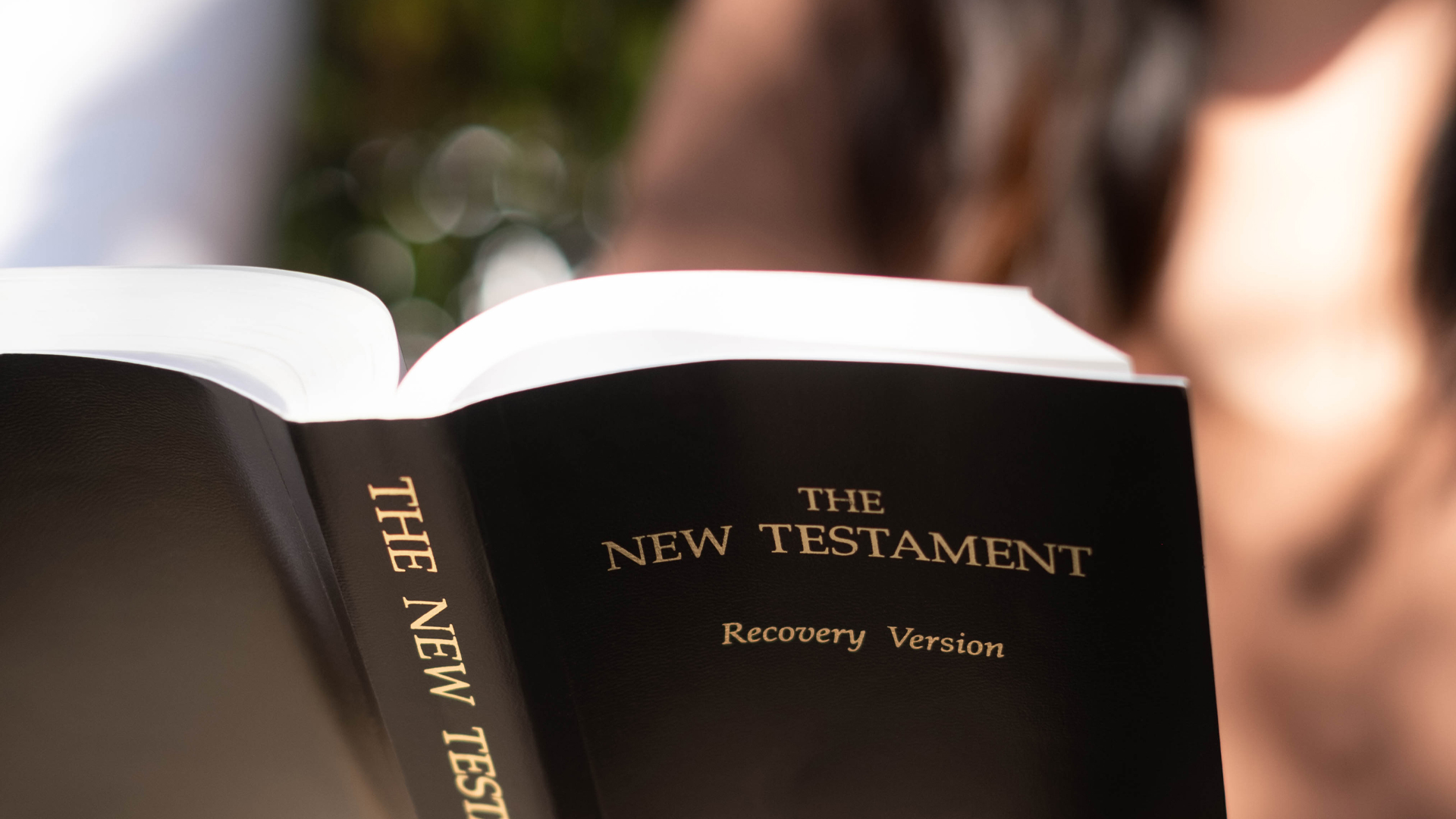
Today, we’ll read a few verses and notes in the New Testament Recovery Version to gain a fresh appreciation of God’s mercy. We’ll also see how we can continue to experience God’s mercy throughout our Christian life.
Since fallen human beings are utterly undeserving and powerless to claim anything from God, why does He extend His mercy to us?
First, to see how much we needed God’s mercy, let’s read Ephesians 2:1-3:
“And you, though dead in your offenses and sins, in which you once walked according to the age of this world, according to the ruler of the authority of the air, of the spirit which is now operating in the sons of disobedience; among whom we also all conducted ourselves once in the lusts of our flesh, doing the desires of the flesh and of the thoughts, and were by nature children of wrath, even as the rest.”
This was our situation before we were saved. Our condition was truly wretched before God. We were dead in our offenses and sins, walked according to the evil age of this world and according to the evil ruler of the air (Satan), conducted ourselves in the lusts of our flesh, and, by nature, we were children of wrath!
The very next verse begins with “But God.” Ephesians 2:4-5 says:
“But God, being rich in mercy, because of His great love with which He loved us, even when we were dead in offenses, made us alive together with Christ (by grace you have been saved).”
This passage shows us it’s because of God’s greatlove for us that He is rich in mercy to us. Despite our awful condition, God greatly loved us, and in His mercy, He caused us to be saved by grace.
Paul, who was formerly known as Saul, could write these words in Ephesians 2 because he himself had experienced God’s rich mercy.
In 1 Timothy 1:12-13, Paul testified:
“I give thanks to Him who empowers me, Christ Jesus our Lord, that He has counted me faithful, appointing me to the ministry, who formerly was a blasphemer and a persecutor and an insulting person; but I was shown mercy because, being ignorant, I acted in unbelief.”
This was Paul’s testimony: “I was shown mercy.”
In the New Testament Recovery Version, note 3 on mercy in verse 13 says:
“Saul, a blasphemer and a persecutor, first was shown mercy and then received grace (v. 14). Mercy reaches farther toward the unworthy one than grace does. Because Saul was one who blasphemed God and persecuted man, God’s mercy reached him before the Lord’s grace did.”
God’s mercy was able to reach even a person like Saul, one who blasphemed God and persecuted the believers of Jesus! This shows how rich God’s mercy is. It extends to even the most unworthy and seemingly unreachable.
God had mercy on Saul, not just to turn him from being a blasphemer and insulting person, but also to bring him into a position where he could receive and enjoy God’s marvelous grace.
We all experienced the mercy of God when we were saved, and we can continue to enjoy His mercy throughout our lives.
As we go on in our Christian life, we may try our best not to make mistakes. But although we’re born again and eternally saved, we still have our sinful nature. This causes us to fail and commit sins, even though we don’t want to. When this happens, we must repent and confess that sin to the Lord. This is essential. Confessing is how we’re forgiven and cleansed.
But after we’ve confessed our sins, we still might feel quite low because of our failures, disgusted with ourselves, and even completely defeated. But we don’t have to stay in such a disheartened state. We need to remember that God is always rich in mercy.
At such times, we can be encouraged by Hebrews 4:15-16:
“For we do not have a High Priest who cannot be touched with the feeling of our weaknesses, but One who has been tempted in all respects like us, yet without sin. Let us therefore come forward with boldness to the throne of grace that we may receive mercy and find grace for timely help.”
Jesus, our High Priest, is touched with the feeling of our weaknesses. So even when we’re feeling weak and low, we can come forward boldly to the throne of grace to receive mercy and find grace.
The first part of note 2 on mercy explains:
“Both God’s mercy and God’s grace are the expression of His love. When we are in a pitiful condition, first God’s mercy reaches us and brings us into a situation in which He is able to favor us with His grace. Luke 15:20-24 tells us that when the father saw the prodigal son returning, he had compassion on him. That was mercy, which expressed the father’s love. Then the father clothed him with the best robe and fed him with the fattened calf. That was grace, which again manifested the father’s love. God’s mercy reaches farther and bridges the gap between us and God’s grace.”
In Luke 15, the prodigal son had utterly failed his father, having squandered his entire inheritance, and was reduced to a pitiful condition. He was in no position to receive anything from his father. But when he returned home, his father’s compassion bridged the gap and reached him. Affectionately receiving his son, the father then clothed him and fed him with the fattened calf.
At times, we also may be in a pitiful condition, and the gap between us and God’s grace seems insurmountable to us. But God’s mercy can bridge that gap and bring us into a situation where we can once again enjoy His grace.
The second part of note 2 on mercy gives us a way to experience God’s mercy and grace again and again:
“God’s mercy and grace are always available to us. However, we need to receive and find them by exercising our spirit to come to the throne of grace and contact our High Priest [Jesus], who is touched with the feeling of all our weaknesses. By this word the writer of this book encouraged the wearied Hebrew believers to receive mercy and find grace for timely help, that they might be set upright (12:12).”
On God’s side, His mercy and grace are available to us all the time, but on our side, we must come forward to the throne of grace in order to freshly receive mercy and find grace. We do this by exercising our spirit.
A simple way to exercise our spirit is by calling on the name of Jesus. Romans 10:12 tells us the Lord is “rich to all who call upon Him,” and Psalm 86:5 says, “You, O Lord, are good and ready to forgive and abundant in lovingkindness to all who call upon You.” We can call quietly or out loud; sometimes when we’re desperate, we may even cry out to the Lord.
When we exercise our spirit by calling upon His name, we come forward to the throne of grace and are able to receive God’s rich mercy and enjoy His grace again. This is something we can practice every day.
Besides calling on the Lord, we can also exercise our spirit by praying and singing to Him. For instance, we can sing a hymn such as the one below, which was written by Witness Lee, the author of the notes and outlines in the Recovery Version. This hymn praises God for His rich mercy. As we sing hymns like this, we enjoy His mercy afresh and are brought into thanks and praise to the Lord for it. You can hear the tune here:
God, we praise Thee for Thy mercy,
’Tis so great and so profound!
In our weakness and our failures;
With its greatness it abounds.
We adore Thee! we adore Thee!
With such mercy we’ve been crowned!
With such mercy we’ve been crowned!
How we marvel at this mercy
So far-reaching and so vast!
It has reached us, e’en the sinners,
And will ever hold us fast.
From this mercy, from this mercy,
What can cause us to be cast?
For Thy mercy we are grateful,
’Tis so rich, so plenteous!
Thru Thy mercy in redemption,
Thou hast richly favored us.
If without this, if without this,
How could we be favored thus?
Oh, Thy mercy, so inspiring!
Gentle, tender, dear and sweet!
With Thy patience and Thy kindness,
Us in all our need it meets.
It we treasure, it we treasure,
Nothing can with it compete.
Father, we enjoy Thy mercy,
Ever fresh and ever new;
Every morning shed upon us,
It refreshes as the dew.
How we taste it! how we taste it!
Giving Thee the praises due.
We can never cease to praise Thee,
As Thy mercy e’er endures;
All Thy grace and all Thy favor,
Ever for us it secures.
Trusting in it, trusting in it,
Thy sure mercy us assures.
(Hymns, number 26, published by Living Stream Ministry)
The Bible reveals so much about God’s mercy; we could only touch on it briefly in this post. But we hope you’ve seen something of how rich God’s mercy is to us and are encouraged to continue experiencing it daily.
If you live in the US, you can order a free copy of the New Testament Recovery Version here. In it, you’ll find many verse cross-references on mercy and notes on those verses that will enrich your appreciation of God’s rich mercy.

When we repented to God and received the Lord Jesus as our Savior, many wonderful things happened! Among them, our sins were forgiven, and we were brought into fellowship with God.
In a previous post, we saw that God’s forgiveness of our sins is absolute. The Bible shows us our sinful record is abolished, and we’re released from God’s righteous judgment. God’s forgiveness takes care of our record of sin. But there’s another problem: our sins also leave ugly stains on us.
Thankfully, there’s good news! The Bible assures us of both God’s forgiveness and His cleansing. 1 John 1:9 says:
“If we confess our sins, He is faithful and righteous to forgive us our sins and cleanse us from all unrighteousness.”
And note 3 on cleanse in the New Testament Recovery Version shows us the difference between forgiveness and cleansing:
“To forgive us is to release us from the offense of our sins, whereas to cleanse us is to wash us from the stain of our unrighteousness.”
In this post, we’ll read more verses and notes from the Recovery Version to focus on how God cleanses us of our sins.
Before we were saved, we all lived a life that was apart from God. Everything we were and did was against God, who is holy and righteous. We trespassed against Him in countless ways.
In Ephesians 2:12, Paul reminds the believers in Ephesus of their condition before they were saved. It says:
“That you were at that time apart from Christ, alienated from the commonwealth of Israel, and strangers to the covenants of the promise, having no hope and without God in the world.”
Paul states even more strongly in Romans 6 that we were “slaves of sin” who presented our bodies as “slaves to uncleanness and lawlessness.” Our actions, our words, and even our thoughts were wrong and sinful.
Furthermore, Isaiah 64:6 shows us that in God’s eyes, even our good deeds were filthy:
“All of us became like him who is unclean, and all our righteousnesses are like a soiled garment.”
Filthy and sin-stained in every way, how desperately we needed God’s cleansing!
[[Free Study Bible]]
Hebrews 1:3 says that Jesus, “having made purification of sins, sat down on the right hand of the Majesty on high.”
In Greek, the original language of the New Testament, the word rendered purification in this verse also means washing off, purging, or cleansing. Jesus accomplished this purification once for all by shedding His blood on the cross for us. When we repented and believed in Him, that purification of sins was applied to us. In addition to being forgiven, the stains of our sins were not merely covered up; they were washed off, cleansed, and purged from us.
So we don’t have to wonder whether God still sees the stains of our former sins. They were cleansed away by the blood of Jesus.
Two verses in the Old Testament show us the power and effectiveness of God’s cleansing. Psalms 51:7 says:
“Wash me, and I will be whiter than snow.”
And Isaiah 1:18 says:
“Though your sins are like scarlet, they will be as white as snow; though they are as red as crimson, they will be like wool.”
When God washes away the stains from our sinful past, His cleansing is so absolute that we’re made as white as snow and wool. Both snow and wool are naturally white. For us to be whiter than snow or wool means we’ve been cleansed by the blood of Jesus so deeply and thoroughly that all trace of our sins is gone. It’s as if we had never sinned! This shows us how utterly effective the blood of Jesus is in cleansing us.
Of course, the fact that we’re saved doesn’t mean we’ll never sin again. Our fallen flesh and sinful nature are still with us, and we will inevitably disobey or offend God. But we can experience God’s forgiveness and cleansing afresh whenever we confess our sins to Him, as we saw in 1 John 1:9.
Let’s also read 1 John 1:7:
“But if we walk in the light as He is in the light, we have fellowship with one another, and the blood of Jesus His Son cleanses us from every sin.”
Note 5 on this verse in the Recovery Version explains more about how we experience this cleansing:
“The tense of this verb in Greek is present and denotes continuous action, indicating that the blood of Jesus the Son of God cleanses us all the time, continuously and constantly. Cleansing here refers to the instant cleansing of the Lord’s blood in our conscience. Before God, the redeeming blood of the Lord has cleansed us once for all eternally (Heb. 9:12, 14), and the efficacy of that cleansing lasts forever before God, so that that cleansing need not be repeated. However, in our conscience we need the instant application of the constant cleansing of the Lord’s blood again and again whenever our conscience is enlightened by the divine light in our fellowship with God.”
Whenever our conscience is enlightened in fellowship with God and lets us know we have sinned, we should simply confess our sins to Him so we can experience His forgiveness and cleansing again and again. This will lay a solid foundation for the rest of our Christian life.
Praise God for His forgiveness and cleansing!
If you live in the US, we encourage you to order a free copy of the New Testament Recovery Version so you can read all the notes that accompany the verses mentioned in this post.
Have you ever wondered whether God really forgave you of all the sins you committed before you were saved? Or worried that God didn’t forgive you of a particular sin you committed after you were saved?
Sometimes we may feel forgiven, but other times we may not. Sometimes we may think we’re forgiven, but other times we’re convinced we’re not. But being forgiven by God isn’t based on what we feel or think. The fact of God’s forgiveness is based on His sure Word.
We must have a clear understanding and strong assurance of God’s forgiveness as it applies to both the sins we committed before we were saved and those we commit after. In this post, we’ll discuss some key verses to see this great matter in the Bible. This will rescue us from all unsettling doubts and fears and help us progress in our Christian life.
As a result of the fall of man, we’re all sinful. Our transgressions, evil deeds, and sinful living create a problem between us and God that we can’t solve on our own. And as sinners, we’re condemned to death according to God’s righteous judgment.
But in His wonderful salvation, Christ came as the Lamb of God to die as our Substitute on the cross. He fully paid the price for our sins and redeemed us back to God. When we heard this good news, we repented and believed in Jesus as our Savior. At that time, God forgave us of all our sins that we had previously committed.
So what does it mean to be forgiven? Several words in Greek, the original language of the New Testament, are used for forgive and forgiveness. One of these, aphiemi, literally means to cause to depart. Another, aphesis, means to send away. God’s forgiveness means He causes the sins we committed to depart from us and sends them away; they are no longer with us.
To see how it’s possible for our sins to depart from us, let’s read 1 Peter 2:24:
“Who [Christ] Himself bore up our sins in His body on the tree.”
When the Lord Jesus was on the cross (the tree), God laid the sins of the world on Him. Jesus carried all our sins and suffered the judgment and punishment for them in our place. This is how our sins departed from us forever.
So where did our sins go? To answer this question, we need to turn to the Old Testament, which reveals many different aspects of who God is and how He deals with humanity in the way of pictures, or types.
In Leviticus 16, we can see a vivid portrayal of the great redemption Christ accomplished for us. In this chapter concerning the atonement of the children of Israel, God instructed Aaron, the high priest, to take two male goats for a sin offering. Verse 8 says:
“And Aaron shall cast lots on the two goats: one lot for Jehovah and the other lot for Azazel.”
What did these two goats represent? Note 1 on Azazel in the Recovery Version of the Bible explains:
“Azazel signifies Satan, the devil, the sinful one, the one who is the source, the origin, of sin (John 8:44). The goat that was for Jehovah was to be killed (v. 9), but the goat that was for Azazel was to be sent away into the wilderness to bear away all the iniquities of the children of Israel on itself (vv. 10, 20-22). This signifies that Christ as the sin offering for God’s people, on the one hand, deals with our sin before God and, on the other hand, sends sin, through the efficacy of the cross, back to Satan, from whom sin came into man. Through the cross the Lord Jesus has the position and qualification with the power, strength, and authority to take sin away from the redeemed ones (John 1:29; Heb. 9:26) and send it back to its source, Satan, who will bear it in the lake of fire forever (Rev. 20:10).”
This is God’s forgiveness. The Lord Jesus as our sin offering took our sins away from us and sent them back to Satan, where they came from. When God forgives us, our sins are no longer with us!
Though God loves us immensely, He is also righteous. Our sins offend Him and violate His righteousness; anyone who sins is condemned to death. So how is it possible for God to forgive sinners?
Hebrews 9:22 clearly says:
“Without shedding of blood there is no forgiveness.”
This verse makes it clear that God’s forgiveness requires and is based on the shedding of blood. But whose blood?
Note 1 on shedding of blood in this verse explains:
“Without the shedding of blood there is no forgiveness of sins. Without forgiveness of sins there is no way for the requirement of God’s righteousness to be fulfilled that the covenant may be enacted. But Christ’s blood was shed for the forgiveness of sins, and the covenant was enacted with His blood (Matt. 26:28).”
In the Old Testament, when God’s people sinned they had to offer Him an animal that would shed its blood by being killed on the altar. This was God’s way of atonement at that time. The animal whose blood was shed was a symbol, a picture, that pointed to the Lord Jesus. Jesus is the sinless, spotless Lamb of God, the real sacrifice for sins.
On the night Jesus was betrayed, He took a cup and gave it to His disciples. Matthew 26:28 records what He spoke at that time, just before His crucifixion:
“This is My blood of the covenant, which is being poured out for many for forgiveness of sins.”
On the cross, the Lord Jesus poured out His blood, fulfilling the righteous requirement of God and granting us forgiveness of sins. How precious Christ’s blood is to both God and us!
Acts 10:43 says:
“To this One [Jesus] all the prophets testify that through His name everyone who believes into Him will receive forgiveness of sins.”
The apostle Peter spoke this word to a Roman centurion named Cornelius. Acts 10:2 tells us that Cornelius was “devout and one who feared God with all his household, giving many alms to the people and beseeching God continually.” Peter made it clear to Cornelius that by believing in Jesus, he would receive forgiveness of sins. There was no other requirement to fulfill.
In the Recovery Version, note 1 on forgiveness in Acts 10:43 explains:
“This proves that even though Cornelius feared God and worked righteousness and his prayers and alms had been accepted by God, he still needed God’s forgiveness of his sins through his believing into Christ, the Redeemer.”
When we believe in Christ the Redeemer, God forgives us of all the sins we’ve committed immediately, without delay. Our sinful record with God is erased. Forgiveness is the very first thing we enjoy in God’s salvation.
[[Free Study Bible]]
Of course, after we’re saved, we still commit sins and offend God. Does God forgive those sins?
Yes, He does! But when we sin after we’re saved, we must confess our sins to God in order to receive His forgiveness.
The apostle John wrote 1 John 1:9 to believers. It says:
“If we confess our sins, He is faithful and righteous to forgive us our sins and cleanse us from all unrighteousness.”
God doesn’t require us to do penance or perform good works in order to earn His forgiveness. We must simply acknowledge and confess our sins to God, and His Word tells us He is faithful and righteous to forgive and even cleanse us.
Note 2 on the word faithful in this verse explains what God does when we confess:
“God is faithful in His word (v. 10) and righteous in the blood of Jesus His Son (v. 7). His word is the word of the truth of His gospel (Eph. 1:13), which tells us that He will forgive us our sins because of Christ (Acts 10:43); and the blood of Christ has fulfilled His righteous requirements that He might forgive us our sins (Matt. 26:28). If we confess our sins, He, according to His word and based on the redemption through the blood of Jesus, forgives us because He must be faithful in His word and righteous in the blood of Jesus; otherwise, He would be unfaithful and unrighteous. Our confession is needed for His forgiveness. Such forgiveness of God, which is for the restoration of our fellowship with Him, is conditional; it depends on our confession.”
We may have a very good memory of our past sins and failures. And even though we know God has sent them away from us, we may still fear that He remembers them.
God’s Word reveals His attitude toward our past sins. Hebrews 8:12 says:
“For I will be propitious to their unrighteousnesses, and their sins I shall by no means remember anymore.”
This verse tells us clearly that God doesn’t keep a record of our sins! When we confess and He forgives, He forgets. If we try to remind God of a sin we’ve already confessed, He doesn’t remember it.
We’ve seen how God forgives us immediately, thoroughly, and absolutely, and that His forgiveness is based entirely on Christ’s death on the cross for us and on His shed blood.
Of course, knowing the depth and thoroughness of God’s forgiveness doesn’t give us the right to be careless in our living or indifferent about committing sins. Instead, we need to take our sins seriously because they cut off the fellowship between us and God. So when we sin, we must confess. We then experience His forgiveness, which restores the fellowship between us and causes us to love Him more. And because we love Him, we don’t want to offend Him.
When we know and experience the truth of God’s forgiveness, we’re set free from oppressing doubts and fears. Then we can go on in our Christian life to grow in the divine life of God with grateful hearts. Thank God for His forgiveness of our sins!
If you live in the US, we encourage you to order a free copy of the New Testament Recovery Version here.